
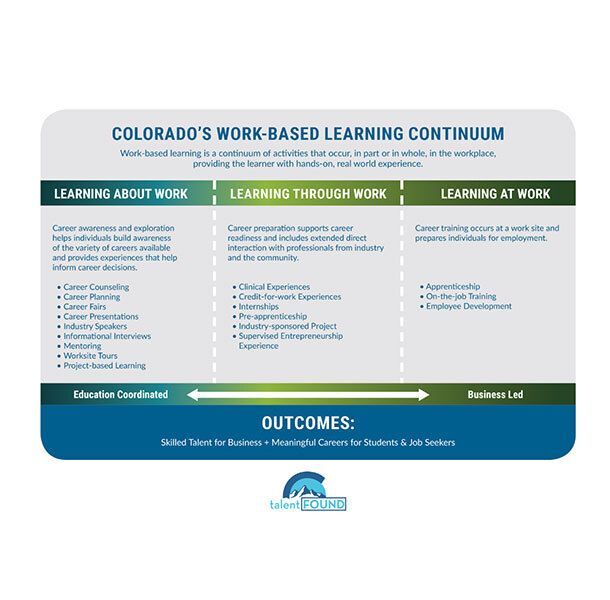
Check out Colorado's Work-Based Learning Continuum
Work-based learning (WBL) is broad term that includes activities across the K-12 and higher education spectrum. Check out Colorado's work-based learning continuum. From kindergarten career days to collegiate internships and registered apprenticeships, WBL opportunities are vital to helping people of all ages seek careers that interest them.
What Is Work-Based Learning?
Work-Based Learning (WBL) is an educational approach that connects classroom instruction with real-world work experiences. By bridging the gap between school and employment, WBL gives students and job seekers hands-on opportunities to build career-ready skills, explore career pathways, and develop professional networks.
Through experiences such as internships, job shadowing, apprenticeships, and simulated work environments, learners move beyond textbooks to gain practical knowledge, earn industry-recognized credentials, and build the confidence needed for long-term career success. At the same time, employers benefit by helping shape and grow a skilled local talent pipeline.
Key Components of Work-Based Learning
Career Awareness
Workplace tours, guest speakers, and career fairs that introduce learners to a wide range of industries and occupations.
Career Exploration
Job shadowing, informational interviews, and short-term projects that help learners investigate career interests and pathways.
Career Preparation
Internships, apprenticeships, simulated work environments, and industry certifications that build job-ready skills and experience.
Career Placement
Supported job searches, mentoring, and placement services that help learners transition into employment.
Benefits of Work-Based Learning
For Students
Increased engagement and motivation
Greater self-confidence and clarity around career goals
Improved employability and job prospects
For Employers
Access to skilled, motivated emerging talent
A direct way to address workforce needs and succession planning
For the Economy
A better-prepared workforce
Increased economic mobility
Stronger local and regional economies
Work-Based Learning transforms education into experience, turning abstract concepts into practical skills through direct engagement with industry professionals and authentic work settings—making learning more relevant, impactful, and connected to future careers.
